RoomEase
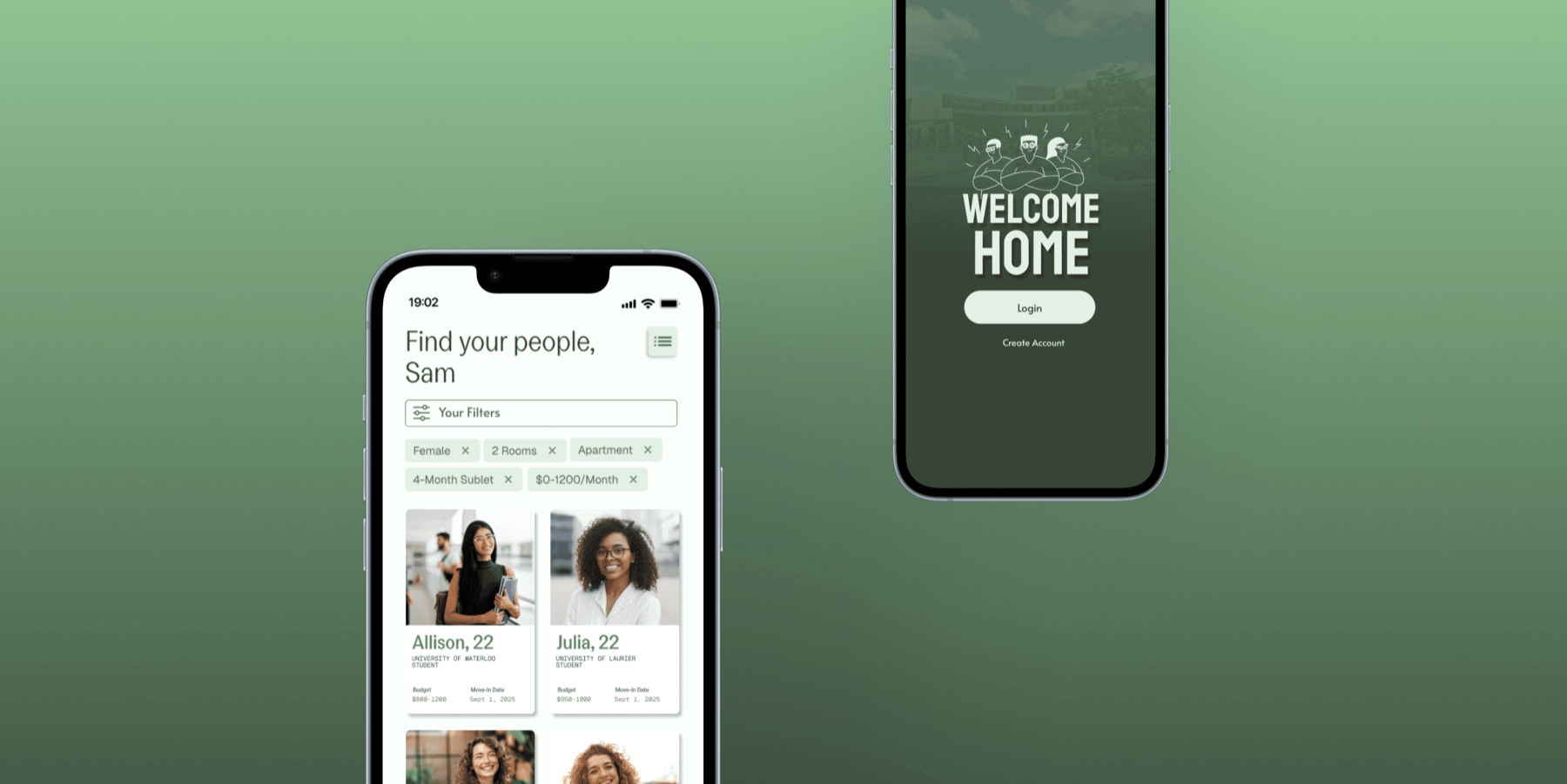
RoomEase is a student team project: a housing and roommate-matching app for students moving off campus after first year.
I owned the visual design and built the design system that kept fifteen-plus screens consistent across five designers.
- Role
- Visual Designer
- Team
- Allison Kalist
Cohen Peters
Elizabeth Ciceu
Fintan Sharpe - Timeline
- Fall 2024
The problem
Finding housing after first year is a scattered, stressful process.
Most students move off campus after first year, but the information they need is spread across many platforms. With no reliable central source, students struggle to compare options or decide with confidence, and a basic transition becomes overwhelming.
How might we make securing off-campus housing after first year simpler and less stressful for students?
Insights
None of the existing platforms were built for students.
Researching housing in Ontario’s university towns, we found listings that felt overwhelming, vague profiles and no way to tell who or what was a good fit. Bamboo Housing had no roommate matching. Places4Students had an outdated interface and reviews no one trusted.
Our own survey backed it up: more than 70% of students reported using over 20 sites before finding housing.
Solution
One place to explore listings, find a roommate and judge a fair price.
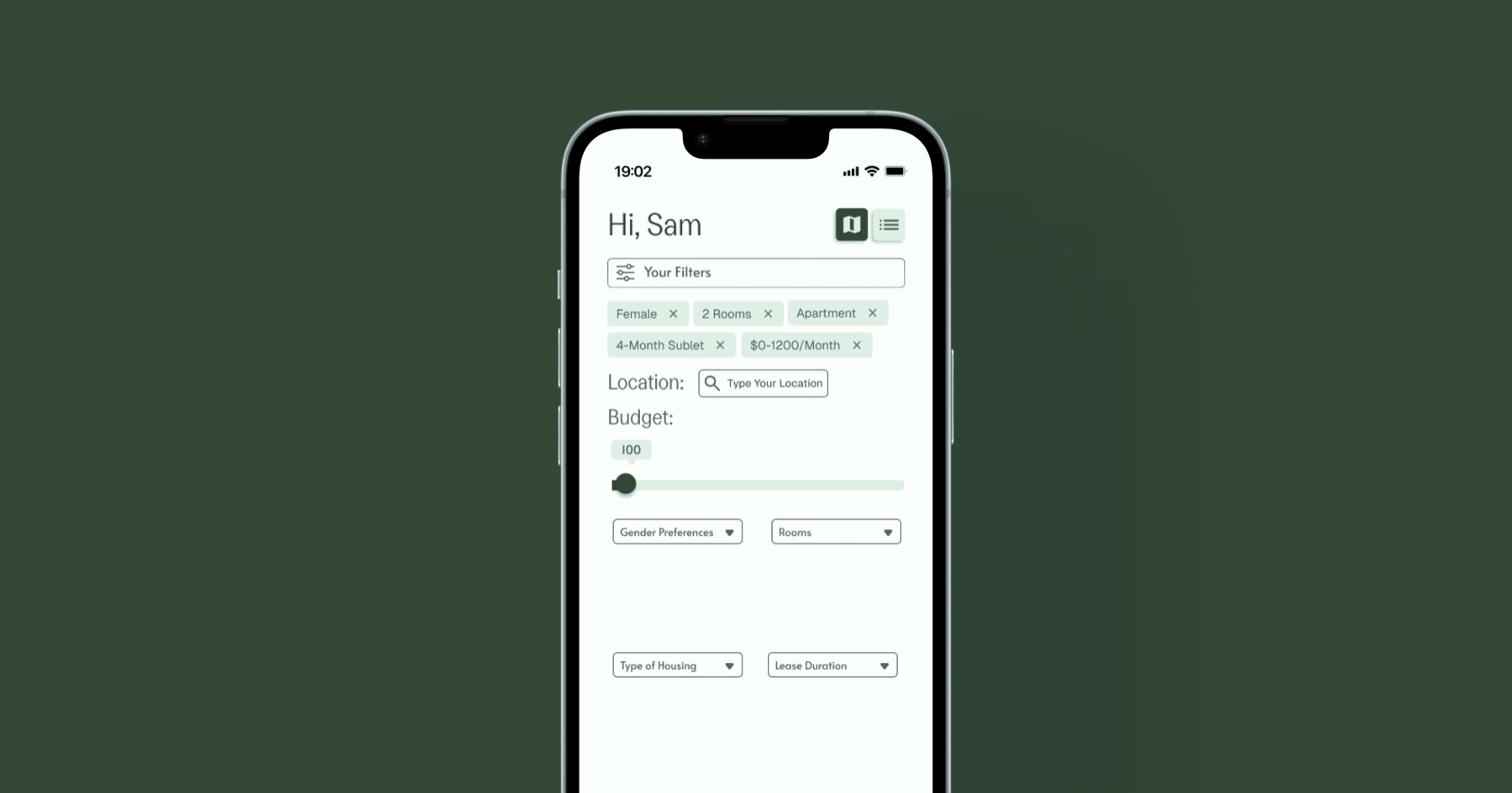
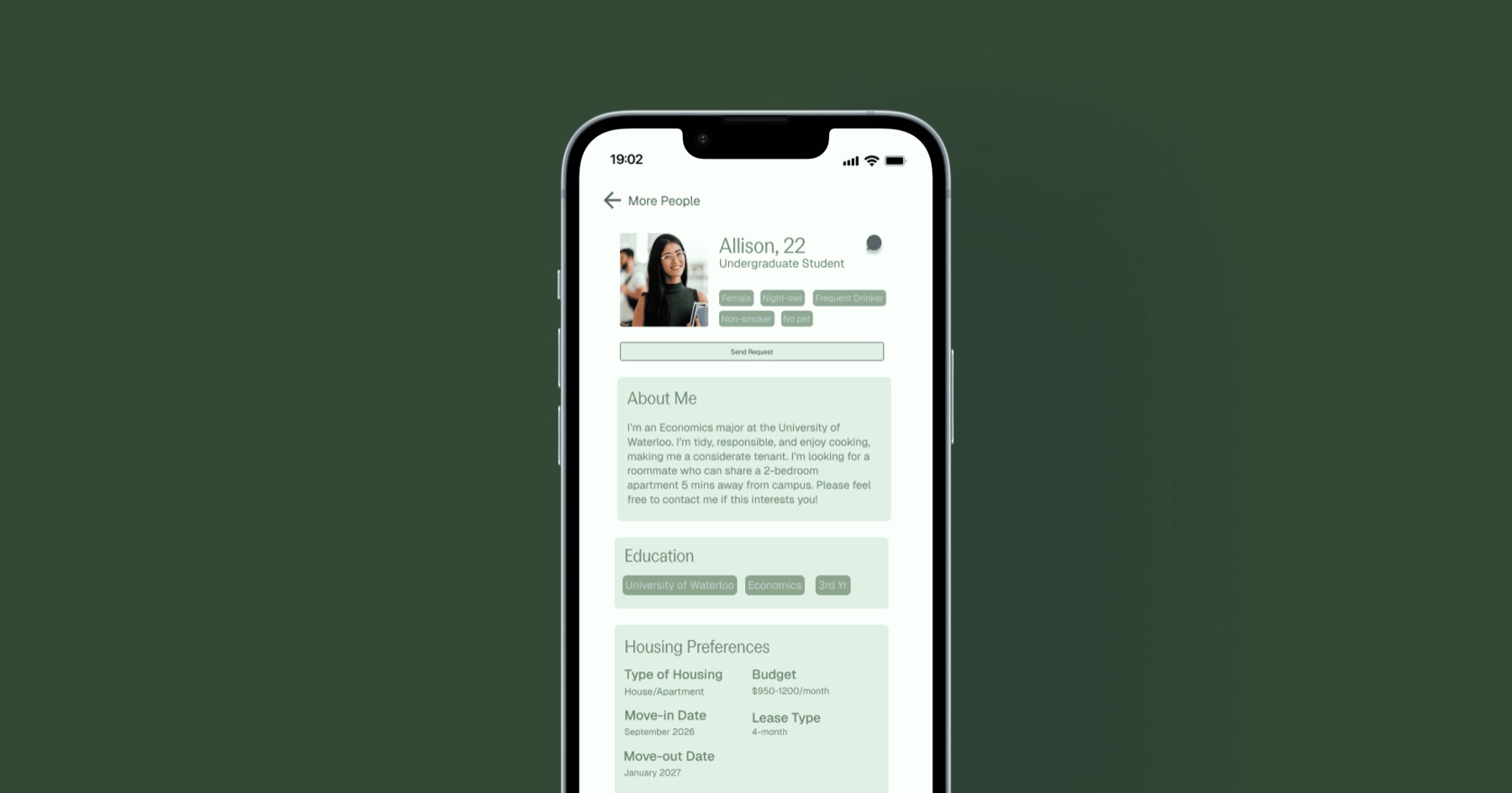
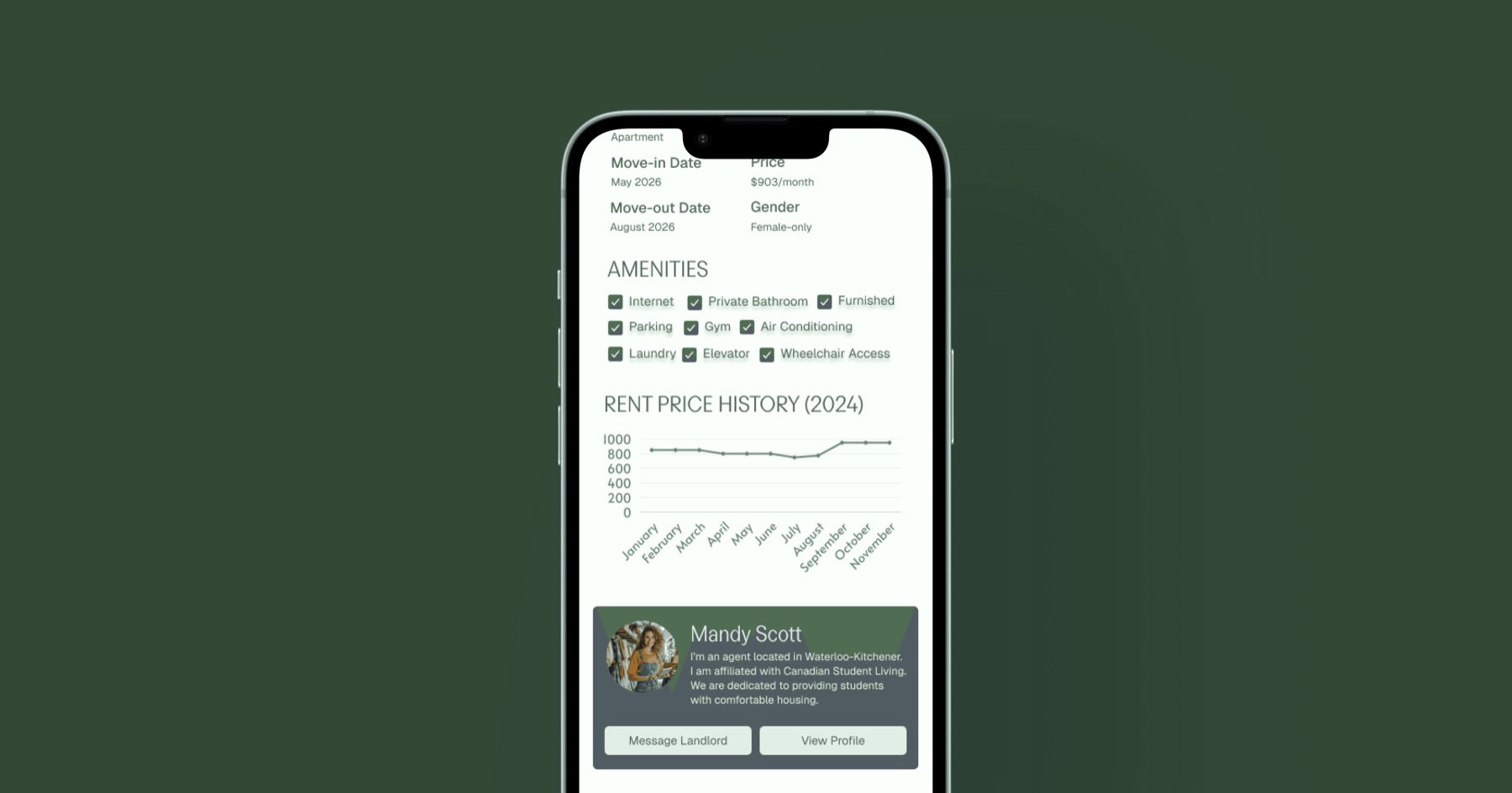
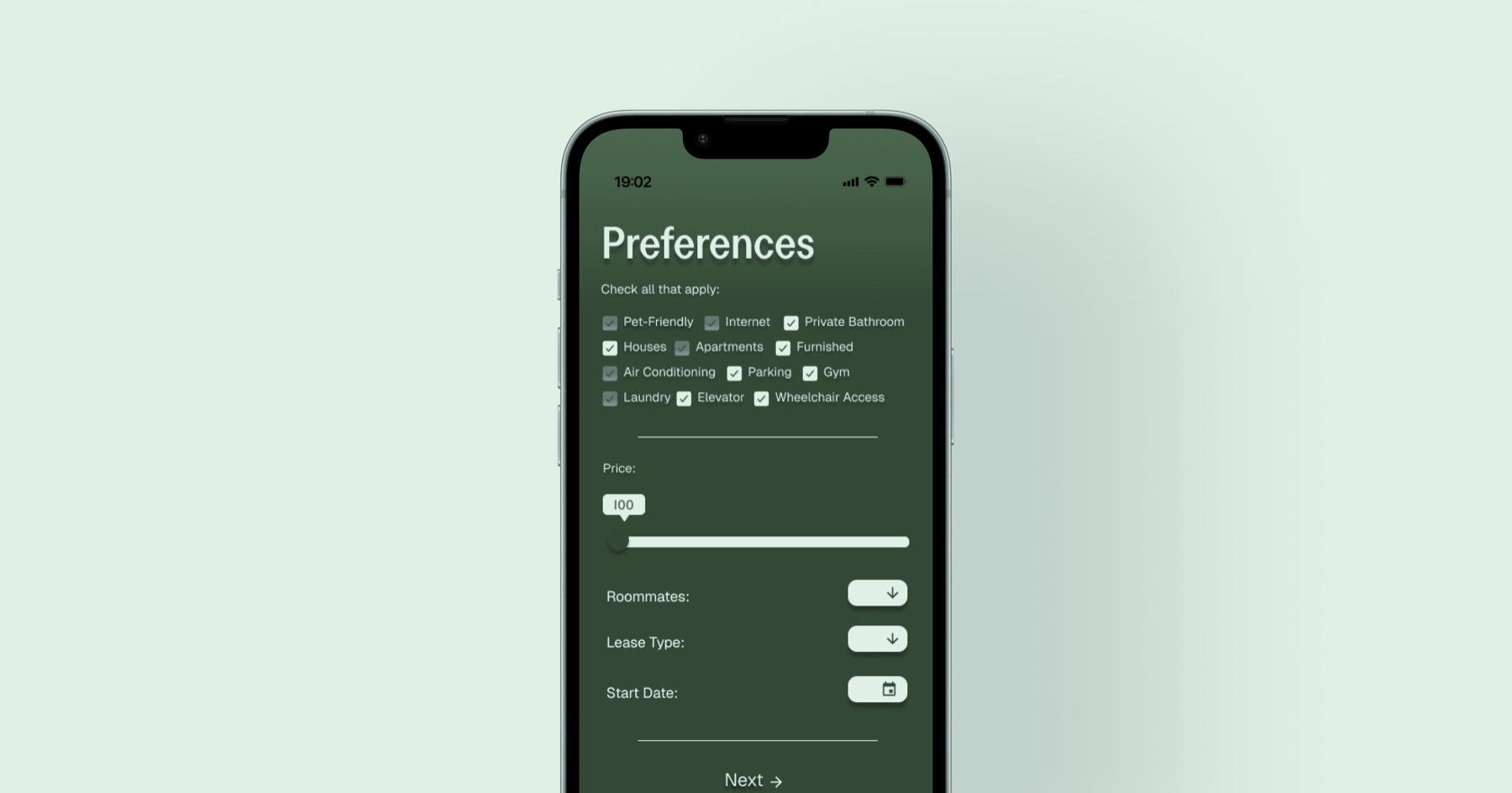
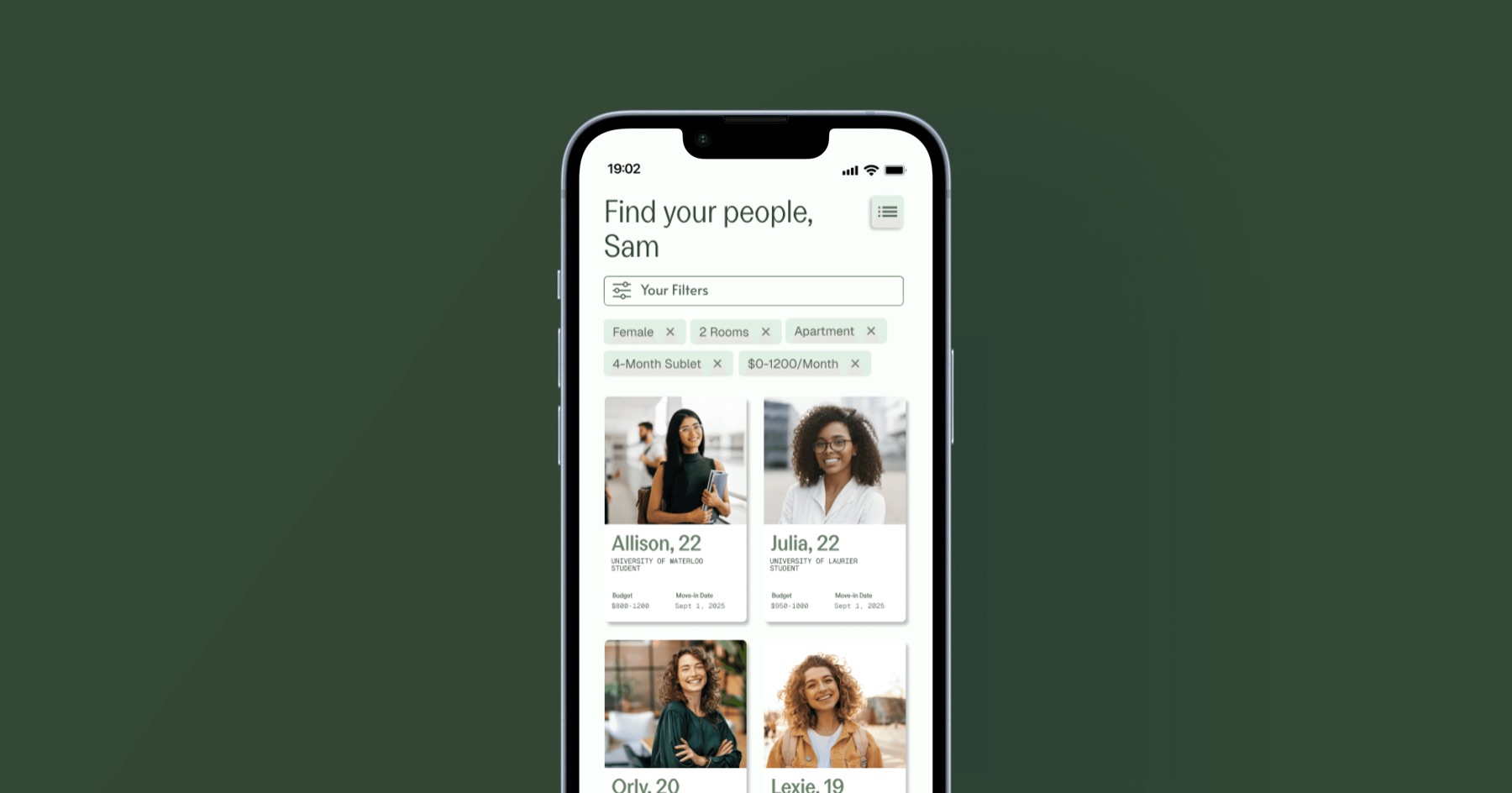
A list and map toggle for comparing locations, advanced filters for lease length, new listings and amenities, and detailed listings with landlord info, reviews and direct messaging. Roommate profiles share lifestyle habits, preferences and budgets up front. Rent price history sets current rent against historical trends so students can spot a fair market rate.
Process
A design system built from scratch, then three features on top of it.
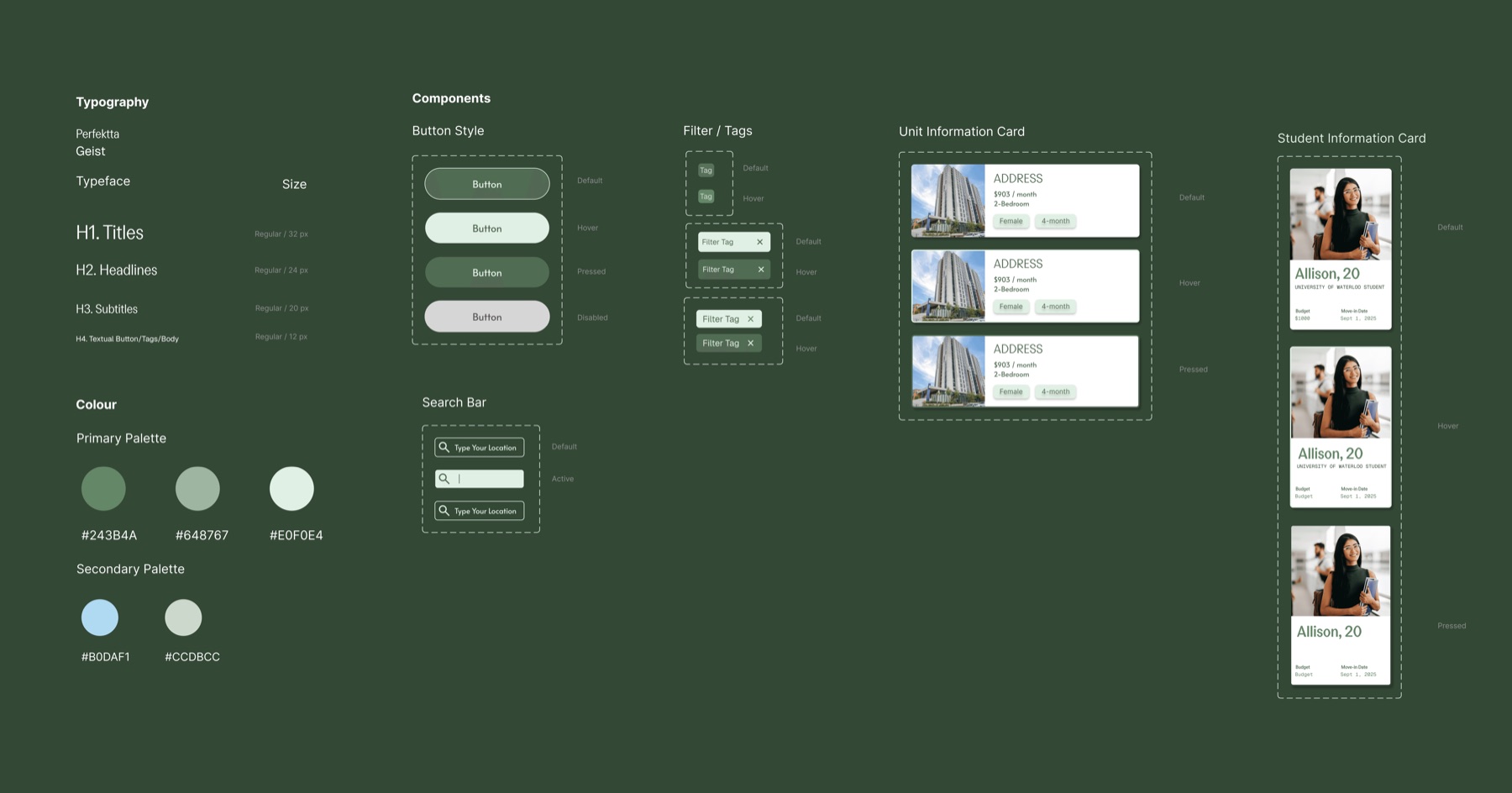
I built a UI kit with colours, typography, buttons and reusable components so fifteen-plus screens stayed cohesive. It was also how I learned to build a design system.
Reflection
Too many cooks, and a lesson in asking for feedback early.
Several people were working on the visual design at once, and different styles meant inconsistency. Next time I would hold design critiques early rather than redesigning at the last minute, and fix one need at a time instead of everything at once.
Want to learn more?
For a more in-depth case study, please reach out to me at nlrdomin[at]uwaterloo[dot]ca
Next
Varick Agents
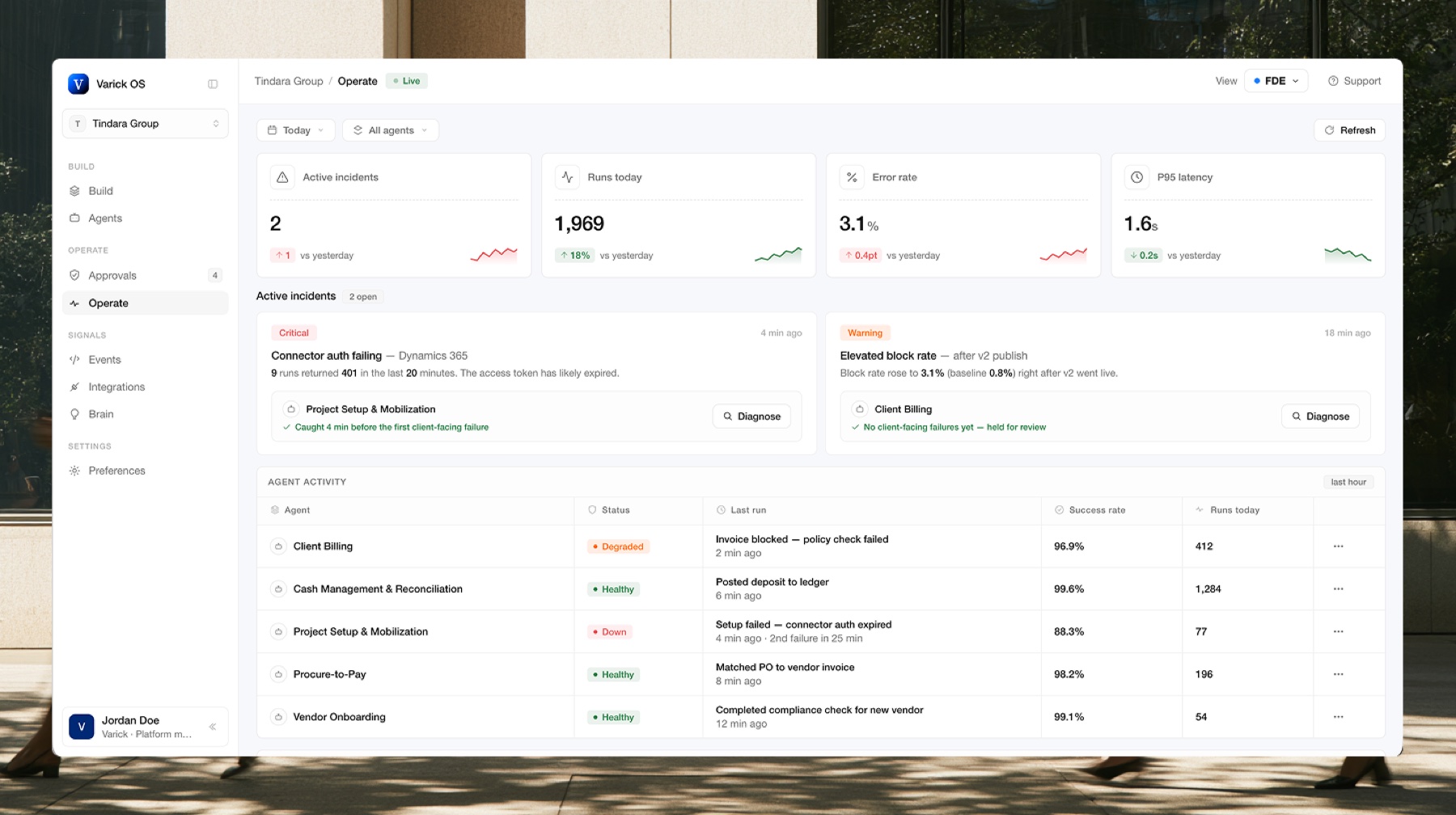
Product design and brand direction for an enterprise AI company